Building an Athlete Scouting Profile
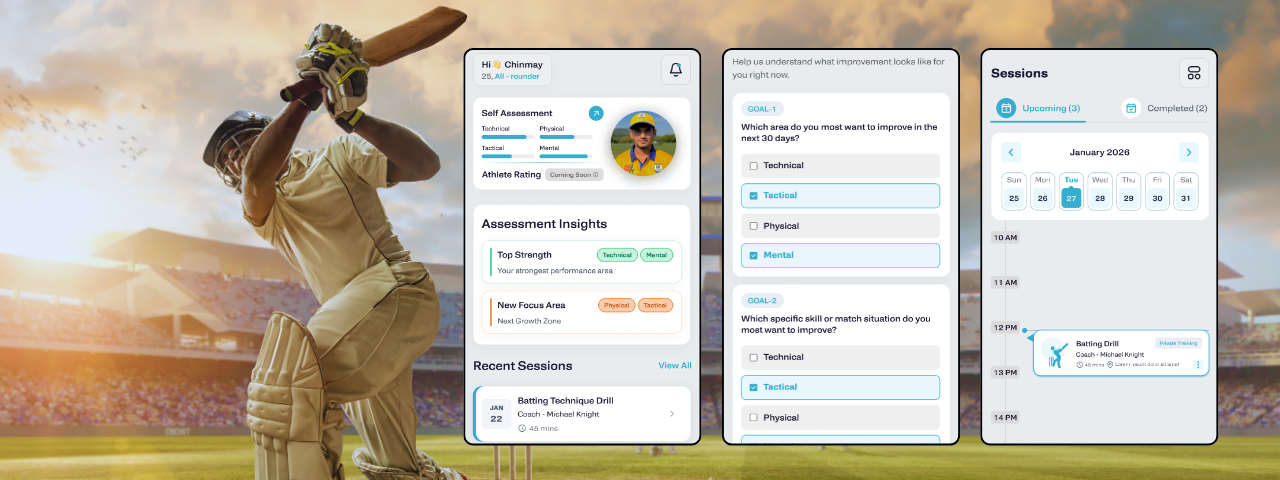
Scouting moved from informal networks and box-score fame to an engineering problem: how to find the small set of athletes who can deliver a defined outcome in a defined role and format. Test cricket, white-ball leagues, and high-performance academies now evaluate athletes against explicit role requirements (skills, situational outcomes, physical profile, availability), not just career averages or reputation. This has changed both what athletes must present and how clubs assess them.
Why generic athlete profiles fail
Role ambiguity: A 30-year batting average of 40 tells nothing about whether the athlete can accelerate in powerplay, rotate in the middle overs, or close the innings under pressure.
Lack of context: A 4/30 in a local T20 vs a tied high-pressure final are not equivalent; raw figures hide conditions, opposition quality, and match situations.
Selector bias: Reputation, club affiliation, or a single viral clip can skew judgment when there’s no standard comparison basis.
Poor discoverability: Emerging athletes outside major circuits seldom have standardised metrics or easily searchable clips, so they remain invisible to clubs looking for specific skills.
What clubs and scouts actually look for
Role clarity: Is the athlete explicitly presented and evidenced as X role? (Yes/No + supporting metrics.)
Recent form: Last 8–12 matches; a sustained signal outweighs an old reputation.
Contextual performance: Has the athlete produced the required outcome against similar opposition and conditions?
Decision-making under pressure: Clips and match logs showing behaviour when result is contested (e.g., chase within 20 balls).
Physical availability & workload: Can they sustain the role across a season? (Injury history, workload metrics.)
Video + data balance: Video confirms execution; data measures consistency and trend. Together they reduce the probability of selection error.
The 10-Point athlete scouting profile
1. Define the Target Role & Format
Clearly specify the primary role, format, and conditions the athlete is being profiled for (e.g., T20 death-over fast bowler, red-ball swing seamer, middle-order finisher).
Include non-negotiable benchmarks tied to that role (e.g., death economy < X, control % > Y).
2. Role-Specific Performance Indicators
-
Batter (Technical & Tactical)
-
Scoring impact: Strike rate by phase, boundary %, and dot-ball avoidance aligned to role demands.
-
Matchups: Performance vs pace/spin, bowler handedness, and specific delivery types (e.g., yorkers, short balls).
-
-
Bowler (Technical & Tactical)
-
Control & threat: Economy and wicket rate by phase, dot-ball %, and wicket-type distribution.
-
Execution quality: Control % (planned line/length), success in pressure overs, and adaptability across conditions.
-
-
Fielder (Physical & Technical)
-
Reliability: Catching efficiency (chance-to-drop ratio) and run-out involvement.
-
Range & skill: Ground coverage, throwing accuracy, and speed-to-release metrics.
-
3. Contextual Performance Filters
Tag every key performance with match context—phase, pitch, boundary size, opposition standard, and match importance.
4. Situation-Specific Video Evidence
Use 15–45s clips directly linked to performance metrics (e.g., final overs of a chase, death bowling spells).
Each clip should be labeled with timestamp, opposition, phase, and outcome to show consistency in performance.
5. Physical Attributes
Speed & power: 10m/30m sprint times, jump or throw metrics relevant to role.
Durability: Workload history, injury record, recovery patterns, and availability consistency.
6. Technical Attributes
Skill foundation: Bat swing mechanics, release consistency, seam position, or catching technique.
Execution under fatigue: Technical stability late in spells or innings.
7. Tactical Awareness
Game awareness: Typical plans vs bowler/batter types, field usage, and situational adjustments.
Coachability: Evidence of learning, adaptability, and implementation of feedback.
8. Mental Attributes
Pressure handling: Performance in high-leverage moments, end-game decisions, and leadership exposure.
Psychological profile: Indicators of resilience, focus, confidence recovery, and competitiveness (formal or observational).
9. Trends & Development Trajectory
Show 8–12 week rolling averages for form-sensitive metrics and year-on-year progression for development roles.
Highlight whether improvements are sustainable or situational.
10. Update & Availability Status
Update the profile monthly or after significant performances, including recent matches played, role changes, and fitness updates.
Scouts should instantly know current readiness, not just historical quality
The gap in traditional scouting systems
Fragmented data: video lives on phones, stats live in spreadsheets, notes in email—no single source of truth.
No standard profile format: each coach interprets metrics differently; comparisons are ad hoc.
Lack of longitudinal tracking: Development trajectories are invisible or poorly recorded.
Limited discoverability: promising athletes outside central hubs lack a platform to present standardised evidence.
Related Post
How Climate Affects Cricket Bats
Every cricket bat has a story etched into its grains — not just of craftsmanship, [...]
Cricket Academies in the USA
Cricket has been growing rapidly in the United States over the last decade, thanks to [...]